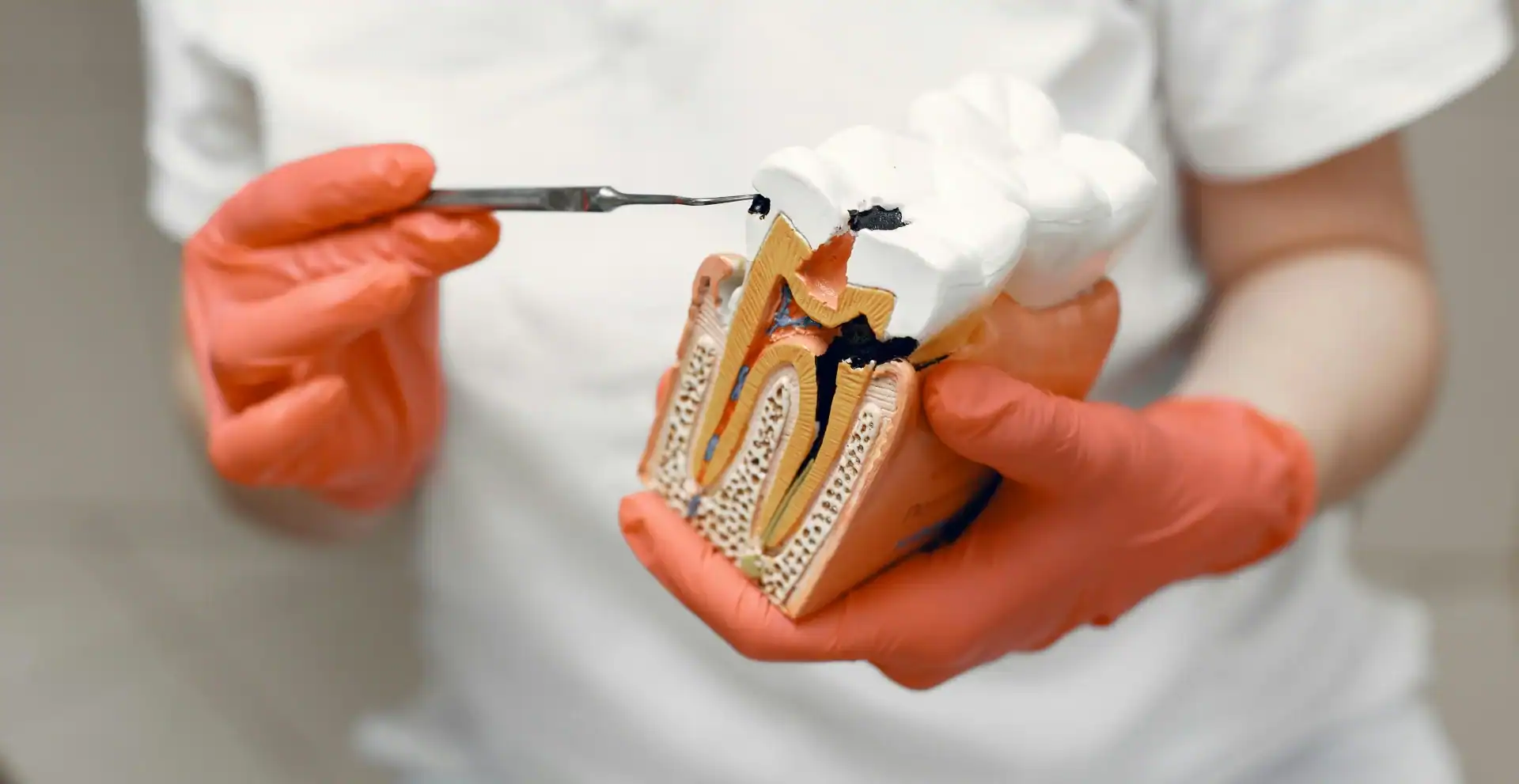
Your jaw should not be the loudest part of lunch. If every bite comes with a click—or your mornings begin with a dull headache and the feeling that you have been clenching your teeth all night—your body may be trying to tell you something.
Recognizing TMJ disorder symptoms in Oklahoma City can help you know when it is time to seek care. Below, we explain what the temporomandibular joint does, the common symptoms to watch for, what may be behind them, and the treatment options that can help patients find relief.
At Dental Innovations, we take the time to listen, examine your teeth and jaw, and look for dental concerns that may be contributing to your discomfort. One symptom rarely tells the whole story. We look at how your jaw, teeth, bite, and daily habits fit together before recommending personalized care that supports your comfort and overall oral health.
What Is a TMJ Disorder?
TMJ stands for temporomandibular joint. You have two temporomandibular joints, one on each side of your head, connecting the lower jaw to the skull. These small but hardworking joints allow the jaw movement needed to speak, chew, yawn, and open your mouth wide.
A temporomandibular joint disorder, commonly shortened to TMD, can affect the joints, surrounding ligaments, or the jaw muscles and facial muscles that control movement. TMJ disorders are not one single condition. They describe more than 30 conditions that may interfere with comfortable jaw function.
According to the National Institute of Dental and Craniofacial Research, TMD is at least twice as common in women as it is in men. It is also more prevalent among adults between the ages of 20 and 40. Still, TMJ problems can affect patients of any age or gender.
What Are the Common Symptoms of TMJ?

The symptoms of TMJ can vary from one person to another. They may be mild and occasional, or they can develop into chronic pain that makes eating, speaking, sleeping, and working more difficult.
- Jaw pain is one of the most common symptoms. You might feel an ache near the ear, tenderness along the jawline, or soreness spreading into the cheeks and temples. TMJ pain may become more noticeable while chewing, yawning, or talking for a long time.
- Clicking or popping is another familiar sign. A painless click does not always mean something is wrong. However, persistent joint noises accompanied by pain, jaw locking, or difficulty opening the mouth may be related to disc displacement, joint inflammation, or another TMD condition. An examination is needed to identify the cause.
- Other TMJ symptoms may include frequent headaches, muscle spasms, migraines, tightness in the face, neck pain, or shoulder pain. Chronic muscular tension can radiate from the jaw into the neck and shoulder area. Research has found an association between painful TMD and migraine or tension-type headaches, but that does not mean TMJ is responsible for every headache.
- Ear-related symptoms may include tinnitus, or ringing in the ears, as well as pressure, dizziness, or changes in hearing. These symptoms can have many other causes, so they should not automatically be blamed on the jaw.
- Some patients also have trouble sleeping when pain or teeth grinding continues at night. TMD, bruxism, and poor sleep can occur together, although it is not accurate to assume that an untreated jaw disorder directly causes every sleep disorder.
A misaligned bite or sudden change in bite alignment may make the upper and lower teeth feel as though they no longer fit together correctly. Teeth grinding and jaw clenching can also lead to tooth wear, sensitivity, damaged restorations, and morning soreness. Since these signs overlap with common dental problems, a proper diagnosis matters.
What Can Cause TMJ Problems?
There is not always one clear cause. TMJ problems may begin after an injury to the face or jaw. Arthritis can affect the jaw joint, while stress may lead to unconscious clenching or grinding. Bruxism can place repeated pressure on the joints and muscles, especially when it happens during sleep.
Some patients notice that their bite feels different when TMJ symptoms develop. However, current research does not support a strong connection between a misaligned bite and TMD, so bite alignment should not be assumed to be the cause. Habits such as chewing ice, biting pens, eating very chewy foods, or constantly resting your chin on your hand may also increase jaw tension.
That is why guessing from a click, headache, or sore jaw is not enough. Your treatment plan should reflect what we find during your examination.
When Should You See a Dentist About Jaw Pain?
An occasional tired feeling after chewing something tough may settle on its own. Persistent pain is different. Consider scheduling an evaluation if discomfort lasts, keeps returning, or affects your ability to eat, sleep, speak, or open your mouth normally.
You should also seek care if your jaw becomes stuck, your bite suddenly changes, or the pain began after an injury. Facial swelling, fever, difficulty breathing, or trouble swallowing may indicate a different condition that requires prompt medical or dental attention.
Early diagnosis can help distinguish TMD from a damaged tooth, dental infection, sinus pressure, ear condition, or another source of facial pain. It also provides an opportunity to address grinding, clenching, or tooth wear before more damage occurs.
How We Evaluate TMJ Symptoms
At Dental Innovations, we begin by talking with you. When did the pain start? Is it worse in the morning? Does your jaw click, lock, or become tired during meals? Do stress or certain foods make the discomfort worse?
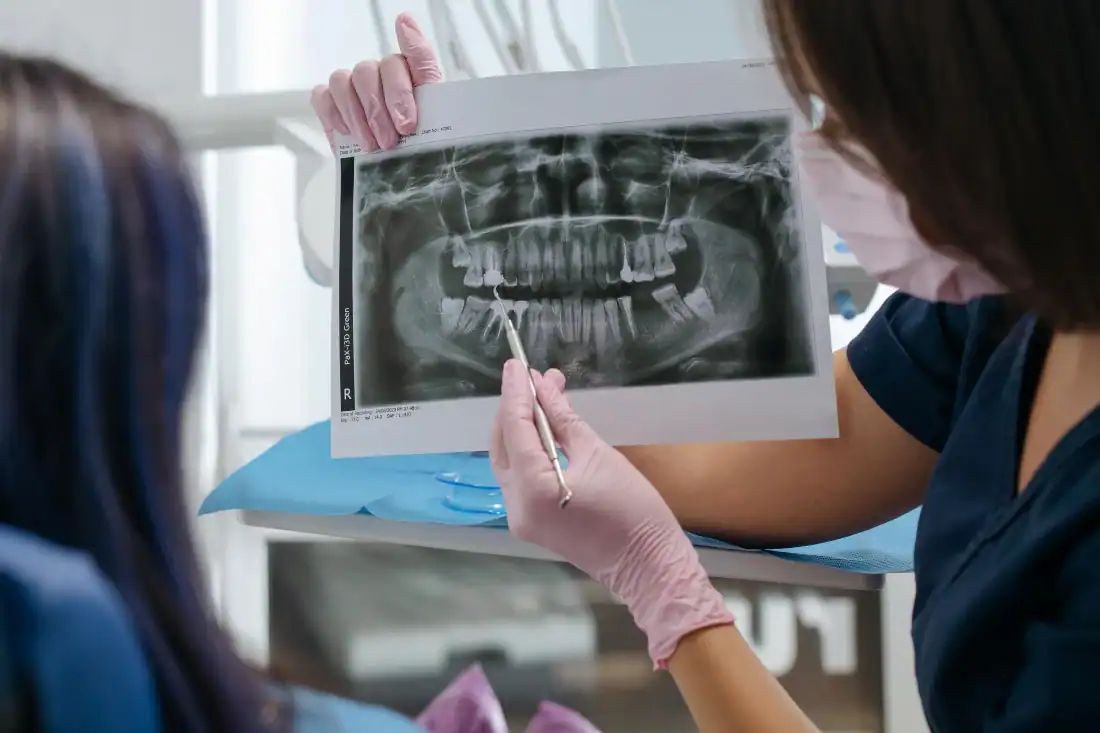
We then examine your mouth, teeth, bite, jaw muscles, and overall oral health. We may check your range of motion, feel for tenderness, and listen for sounds as the joints move. When we need a closer look, dental X-rays or modern imaging can provide more information about your teeth, jaw, and surrounding structures.
We also look for dental concerns that may need separate attention. Tooth wear may require restorative treatment, while an unrelated alignment concern could lead to a conversation about Invisalign. Neither is automatically the cause of your TMJ symptoms.
TMJ Treatment and Self-Care Options

TMJ treatment typically begins with conservative and reversible approaches. Temporary self-care may include eating softer foods, avoiding gum, and giving overworked muscles time to rest. Soft foods may help relieve pain by reducing strain during a flare-up, but they are generally a short-term adjustment rather than a permanent diet.
Warm compresses and dentist-approved relaxation techniques may help with reducing pain and easing jaw tension. Becoming aware of daytime jaw clenching can also make a difference. When your mouth is at rest, your teeth usually should not remain pressed together.
Appliance therapy uses custom-made oral splints or night guards. For the right patient, an appliance may protect the teeth from grinding and help manage jaw clenching. Some patients also experience less discomfort, although night guards do not relieve every type of TMJ pain.
Other treatment options may involve physical therapy, medication, or care from another qualified professional. In selected cases, a doctor may use a corticosteroid injection directly in the affected joint. Botox injections into certain chewing muscles are sometimes used off-label for TMJ pain relief. Research results are mixed, so this approach is considered selectively after a qualified provider evaluates the patient.
Surgical options are generally reserved for serious joint damage or symptoms that have not improved with appropriate conservative care. Procedures may include TMJ arthroscopy or open-joint surgery to repair or replace damaged joint structures. Because surgery carries risks, it should follow a careful diagnosis and consultation with a qualified oral and maxillofacial surgeon.
Frequently Asked Questions About TMJ Disorders
Can untreated TMJ cause chronic migraines?
Not necessarily. Painful TMD and migraines often overlap, and ongoing jaw tension may make headaches worse. However, research does not show that every untreated TMJ problem causes chronic migraines.
Can TMJ cause tinnitus or dizziness?
Yes. Tinnitus, dizziness, ear pressure, and changes in hearing can occur with TMJ disorders. Because ear and neurological conditions may cause similar symptoms, proper evaluation is important.
Can night guards relieve TMJ pain?
A custom appliance may help patients whose symptoms involve grinding or clenching. It can protect the teeth and reduce strain, but it does not treat every cause of TMJ pain.
Find Relief at Dental Innovations
You do not have to plan your day around a sore, tight, or unpredictable jaw. Dental Innovations provides comprehensive dental care in Oklahoma City, including exams, preventive services, modern imaging, restorative treatment, Invisalign, and personalized treatment planning.
If headaches, grinding, jaw locking, or facial pain are getting in the way of meals, sleep, or everyday life, let us take a closer look. Contact Dental Innovations at 405-691-0877 to schedule an evaluation. We will listen to what you are experiencing, examine your teeth and jaw, and help you understand the next step.