Tooth loss is more common than many people realize. Approximately 120 million Americans are missing at least one tooth, and at Dental Innovations, we talk with patients about replacing missing teeth every single week. Two of the most common questions we hear are simple but important: Should I choose dentures or dental implants, and what separates the two?
This guide explains dentures vs. implants in plain language, covering cost, comfort, stability, and long-term oral health, so you can have an informed conversation with our team about which tooth replacement option fits your smile, budget, and lifestyle.
Dentures and Dental Implants at a Glance

Before comparing the details, it helps to understand what each option actually is.
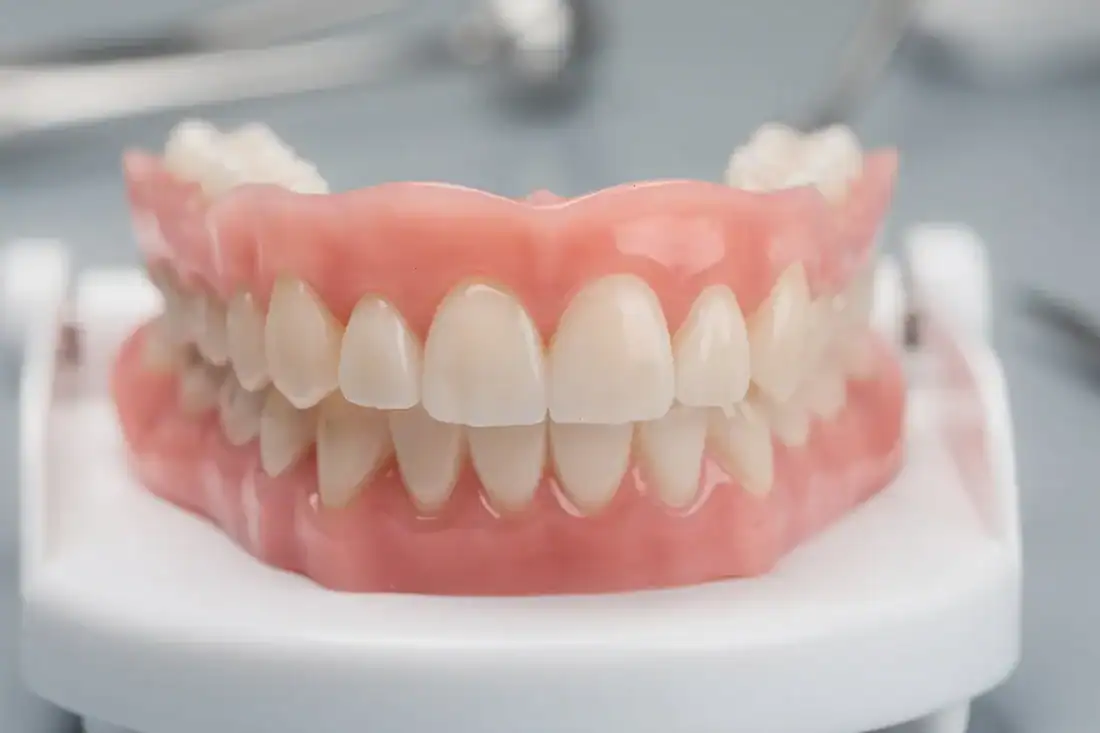
Traditional dentures are removable prosthetic devices designed to replace missing teeth. They rest on the gums and rely on suction or adhesives to stay in place. Dentures can be full sets or partial sets depending on how many teeth are missing, and they have been a trusted dental prosthesis for generations of patients.
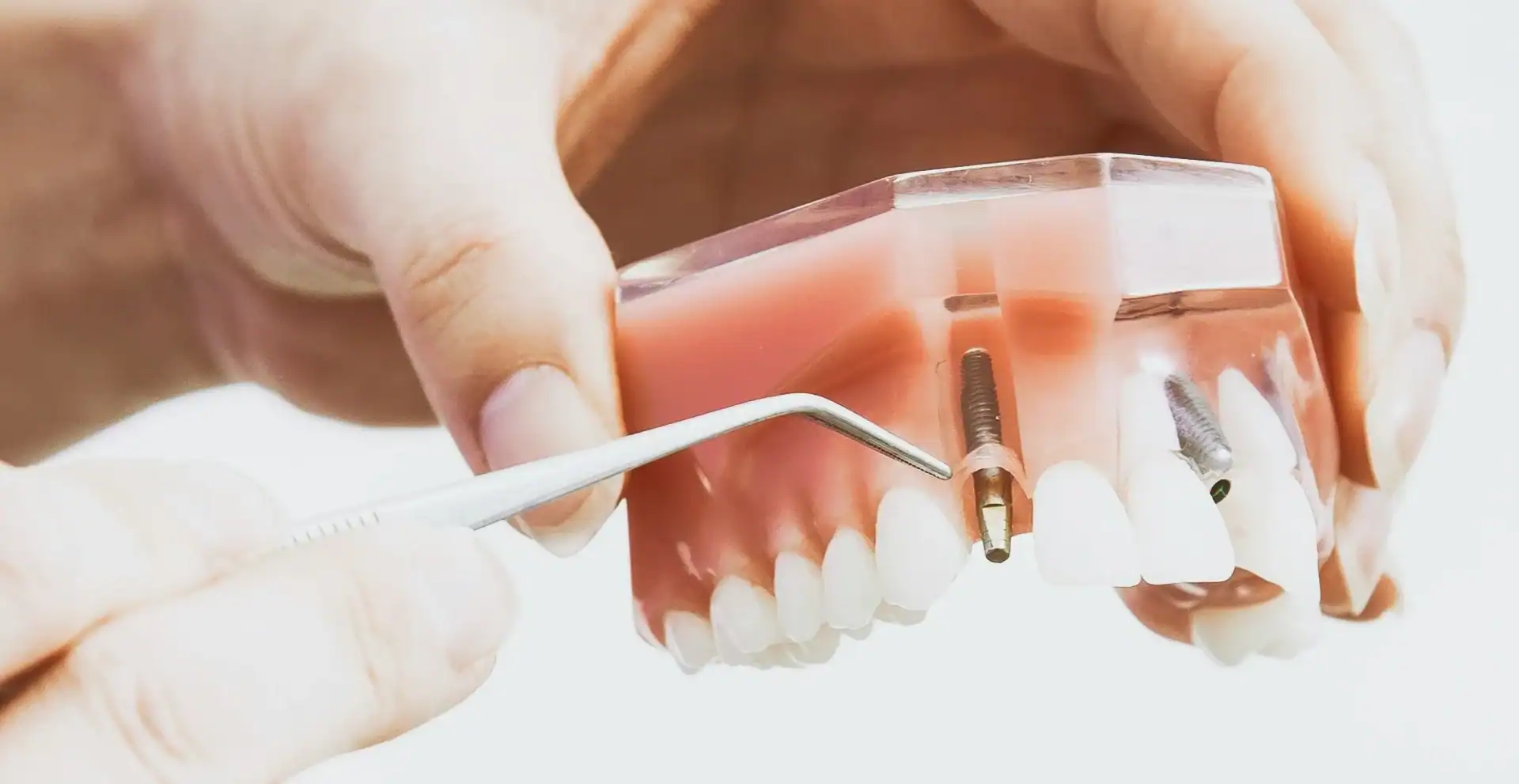
Dental implants are titanium posts surgically placed in the jawbone. Dental implants are permanent tooth replacements requiring a surgical procedure, and once placed, the implant fuses with the surrounding bone through a process called osseointegration. This creates a stable foundation for a crown, bridge, or implant-supported dentures.
When patients ask us about implants vs dentures, we explain that the two options differ significantly in how they interact with the mouth, how long they last, and how they affect jawbone density over time.
What Are Traditional Dentures?
Conventional dentures have long been a reliable way to restore a smile after tooth loss. A complete denture set replaces all the teeth in an upper or lower arch, while partial dentures fill gaps when some natural teeth remain. A removable denture can also be paired with a fixed partial denture, sometimes called a dental bridge, depending on the patient’s needs.
Dentures fit snugly against the gums, and many patients appreciate that they do not require oral surgery to place. At Dental Innovations, we often recommend dentures for patients who want a faster, non-surgical path back to a confident smile.
That said, dentures do have limitations. Because they sit on top of the gums rather than replacing the tooth roots, they do not stimulate the underlying bone, and dentures do not prevent natural bone loss over time. Traditional dentures may also shift while eating or speaking, which can cause irritation and require adjustments. Most dentures need replacement every 5 to 10 years, and many patients need periodic relines to keep dentures fit comfortably as the shape of the gums and facial structure changes.
What Are Dental Implants?
Dental implants work differently from false teeth that sit on the surface of the gums. Instead, implants act as artificial tooth roots, placed directly into the bone structure of the jaw. Over the following months, the implant fuses with the bone, creating a foundation that supports a crown, a fixed bridge, or an entire arch of replacement teeth.
Because dental implants stimulate the jawbone much like real teeth do, they help preserve bone health and reduce the risk of bone resorption. This is one of the biggest advantages implants have over dentures. Implants stimulate bone growth like natural tooth roots, which supports bone preservation and helps maintain jawbone density for years to come.
Placing dental implants is a surgical procedure, and candidates need enough bone structure to support the implant. Patients with significant bone loss may need a bone grafting procedure first to rebuild the jaw before implant placement. Our team at Dental Innovations evaluates each patient’s bone density, gum health, and overall dental health to determine candidacy before moving forward.
How Dentures and Dental Implants Affect the Jawbone
One of the most important differences between dentures and dental implants involves what happens to the jawbone after tooth loss.
Jawbone loss occurs over time when no tooth roots are present to stimulate the bone. Without that stimulation, the jawbone can shrink after tooth loss, a process known as jawbone deterioration. This is true even with well-fitted dentures, since they only rest on the gum surface rather than engaging the bone underneath.
Dental implants solve this problem in a way dentures cannot. Because the implant is anchored directly into the bone, it mimics the function of natural tooth ro ots and helps prevent bone loss. This makes implants an important consideration not just for appearance, but for long-term oral health, facial support, and preserving a natural appearance as the years go by.
Comfort, Stability, and Everyday Function
Stability is one of the biggest factors patients weigh when comparing dentures vs implants. Dental implants provide superior stability compared to dentures because they are fixed in place rather than resting loosely on the gums. Implants feel and function like natural teeth, which means patients can bite, chew, and speak with more confidence.
Traditional dentures, by contrast, can move during normal activity. Even well-fitted removable denture appliances can shift, which sometimes leads to sore spots or the need for adhesives.
For patients who want more stability without full implant surgery for every tooth, implant-supported dentures offer a strong middle ground. This approach combines the benefits of both implants and dentures, using a small number of implants to anchor a denture in place. Implant-supported dentures reduce movement and improve comfort, giving patients much of the stability of implants with a more conservative treatment plan than replacing an entire arch of teeth individually.
Appearance and Oral Function
Modern dental technology has significantly improved how natural both dentures and implants can look. That said, implants tend to offer the most seamless natural appearance because each artificial tooth is designed and placed individually, closely mimicking the size, shape, and position of existing teeth.
Dentures can also restore a full, attractive smile and support the lips and cheeks, which is especially important for patients who have lost multiple teeth and are noticing changes in their facial structure. However, because dentures do not stimulate the bone, some patients notice gradual changes in fit and appearance as the jaw changes shape over the years.
Protecting Surrounding and Remaining Teeth
Another point we discuss often at Dental Innovations involves how each option affects surrounding teeth. Dental implants do not affect neighboring teeth, since the implant stands independently in the bone rather than relying on remaining teeth for support. This is a meaningful advantage for patients who want to protect their natural, healthy teeth from unnecessary strain.
Partial dentures, on the other hand, often use clasps or connectors attached to nearby natural teeth for support. While this works well for many patients, it does place some additional pressure on those surrounding tissues and existing teeth over time.
Patients dealing with gum disease should also know that healthy gums and bone are essential for both dentures and implants. Our team always evaluates oral health thoroughly before recommending a treatment plan, since active gum disease can affect denture fit and implant success alike.
Cost Comparison: Dentures vs Implants

Cost is often the deciding factor for many patients, and it is one of the most common questions we hear.
Dentures typically cost between $600 and $3,000, depending on whether the patient needs a partial or full denture set. This lower initial cost makes dentures an accessible option for many patients, especially those replacing multiple missing teeth or all the teeth in an arch.
Dental implants cost between $3,000 and $6,000 per tooth, and a full set of dental implants can cost $25,000 or more depending on the number of implants needed, bone grafting, and the type of restoration used. While the upfront investment is higher, implants can last a lifetime with proper care, which often makes them a strong long-term value compared to dentures that require replacement every 5 to 10 years.
Traditional dentures require periodic relines or replacements every 5 to 7 years, which adds up in cost and inconvenience over a patient’s lifetime. Implants rarely need removal and help prevent jawbone loss, offering both a functional and financial advantage over time for many patients.
Maintenance and Daily Care
Proper care looks different for each option. Dentures need daily soaking and periodic adjustments to keep them clean and properly fitted. They should be removed at night and cleaned thoroughly to protect oral health and prevent irritation of the gums.
Implants require brushing twice daily and regular dental visits, much like natural teeth. Because a single tooth implant or a full arch of implants integrates with the bone, daily care focuses on the same habits patients already use to protect their teeth and gums, rather than a separate cleaning routine.
Which Option Is Right for You?
There is no single answer that fits every patient, and personal preferences play a real role in this decision. Many patients choose dentures for their lower initial cost and non-surgical placement, while others prioritize the superior stability, bone preservation, and natural feel that implants provide.
Patients with significant bone loss, certain medical conditions, or budget considerations may find dentures to be the more practical permanent solution in the short term, with the option to explore denture implants or implant-supported dentures later. Patients who want the closest experience to natural teeth, along with long term protection for their jawbone and facial structure, often choose dental implants as their preferred path.
Let’s Talk About Your Options

At Dental Innovations, Dr. Mark D. Shirley and our team take the time to evaluate each patient’s oral health, bone density, and personal goals before recommending a treatment plan. Whether you are exploring dentures, dental implants, or a combination of both, we are here to walk you through every option so you can make a confident, informed decision about your smile.
If you are ready to talk about tooth replacement options in Oklahoma City, we invite you to schedule a consultation with our team. We will review your dental health, discuss what to expect from the surgical procedure and healing timelines if implants are a fit, and help you choose the path that best supports your comfort, your budget, and your long-term oral health.
This article is intended for general educational purposes and is not a substitute for a personalized evaluation. Candidacy for dentures, implants, or implant-supported dentures depends on individual factors such as bone structure, gum health, and medical history, and should be discussed directly with our dental team.