When facing tooth loss, understanding your options for replacement teeth can feel overwhelming. If you’re exploring dental implants as a permanent solution for missing teeth, you’re making a smart choice for your oral health. At Dental Innovations, we offer expertise and guidance to help you navigate your choices. Did you know there are actually three distinct types of dental implants, each designed to address different dental needs? Let’s dive into the world of implant dentistry and discover which option might be the perfect fit for restoring your complete smile.
Understanding Dental Implants and Their Importance
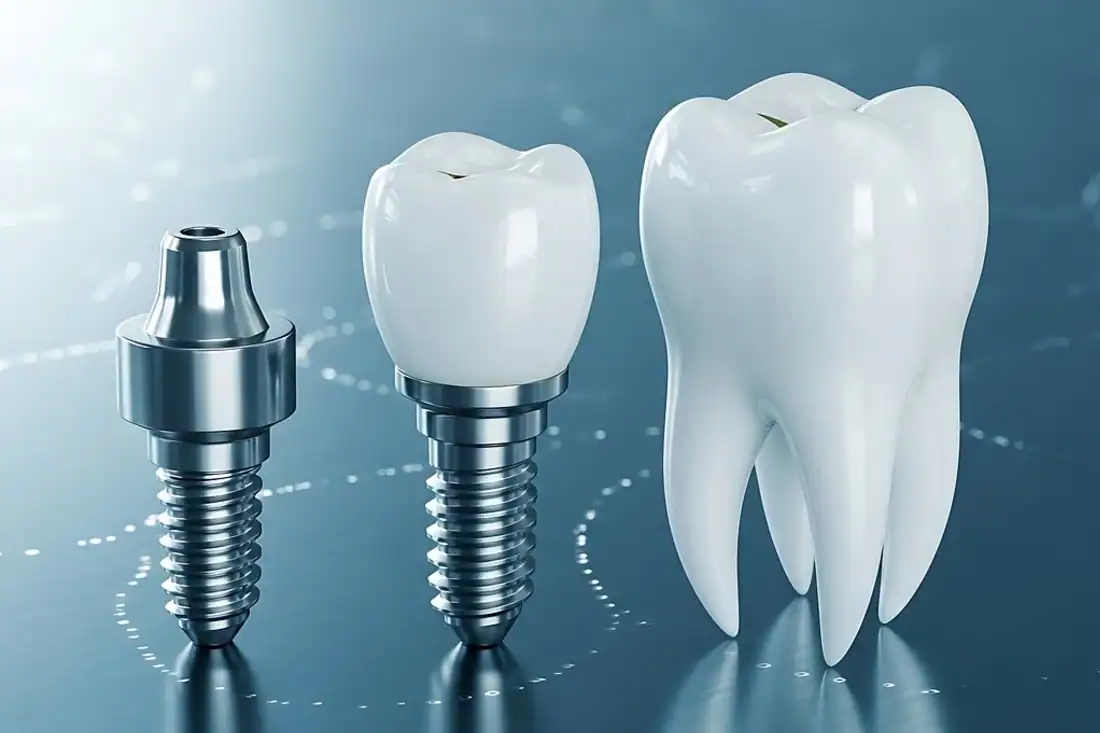
Dental implants have revolutionized how we approach replacing missing teeth. Unlike traditional dentures that simply sit on top of your gums, dental implants function like natural teeth by integrating directly with your jawbone. These artificial tooth roots provide a stable foundation for replacement teeth, preserving your jawbone health and maintaining the integrity of your remaining teeth.
The beauty of implant dentistry lies in its versatility. Whether you’re dealing with a single tooth loss or need full mouth dental implants, there’s a solution designed specifically for your situation. Understanding the types of dental implants available empowers you to have informed conversations with your dental professional about which approach will best restore your dental health and confidence.
The 3 Main Types Of Dental Implants

When people ask “what are the 3 types of dental implants,” they’re referring to three primary placement methods that dental professionals use: endosteal implants, subperiosteal implants, and zygomatic implants. Each type serves different patients based on their bone density, jawbone health, and specific dental restoration needs. Let’s explore each option in detail.
Endosteal Implants: The Gold Standard
Endosteal implants are the most common type of dental implants, and for good reason. These traditional implants consist of a metal implant post—typically made from titanium—that is surgically inserted directly into your jawbone. Think of them as artificial tooth roots that become part of your jaw structure.
The procedure involves placing the implant post into the upper jaw or lower jaw, where it integrates with your bone through a process called osseointegration. As the implant heals over several months, new bone growth occurs around the post, creating a rock-solid foundation. Once healing is complete, your dental professional attaches an abutment and then a permanent crown, completing your new artificial tooth.
Endosteal implants are ideal candidates for patients with good bone density and enough healthy jawbone to support the implant post. They work beautifully for single tooth replacement, multiple missing teeth scenarios, or even as anchors for an implant supported bridge. The success rate is exceptionally high, and they truly feel like a real tooth once the treatment plan is complete.
Subperiosteal Implants: Alternative for Low Bone Density
Subperiosteal implants offer hope for patients who don’t have sufficient jawbone to support traditional implants but want to avoid bone grafting procedures. Instead of being placed inside the jawbone, these implants sit on top of the bone but underneath the gum tissue.
A subperiosteal implant features a metal frame that rests on the jawbone, with posts protruding through the gums to hold the replacement teeth. This design distributes pressure across a wider area of the upper or lower jaw, making it suitable for patients with bone loss who may not be candidates for endosteal implants.
While less common than their endosteal counterparts, subperiosteal implants can effectively stabilize dentures or support multiple teeth without requiring bone augmentation. They’re particularly useful for patients who want to avoid the additional healing time and expense associated with bone grafting.
Zygomatic Implants: The Advanced Solution
Zygomatic implants represent the most advanced dental implant solutions for patients facing severe bone loss in the upper jaw. These specialized implants are considerably longer than traditional implants and are anchored in the zygomatic bone (cheekbone) rather than the jawbone itself.
This innovative approach was developed for patients who have experienced significant deterioration of their maxillary bone, often due to long-term tooth loss, gum disease, or failed previous dental implant procedures. By anchoring in the denser cheekbone, zygomatic implants bypass the need for extensive bone grafting procedures.
Zygomatic implant surgery is more complex than standard dental implant surgery and typically requires maxillofacial surgery expertise. However, for the right candidates, these implants can provide full arch restorations and eliminate the need for months of bone grafting and healing. Some patients can even receive same day implants with temporary tooth replacements, though the permanent restoration comes later after the implant heals.
Comparing The 3 Types Of Dental Implants
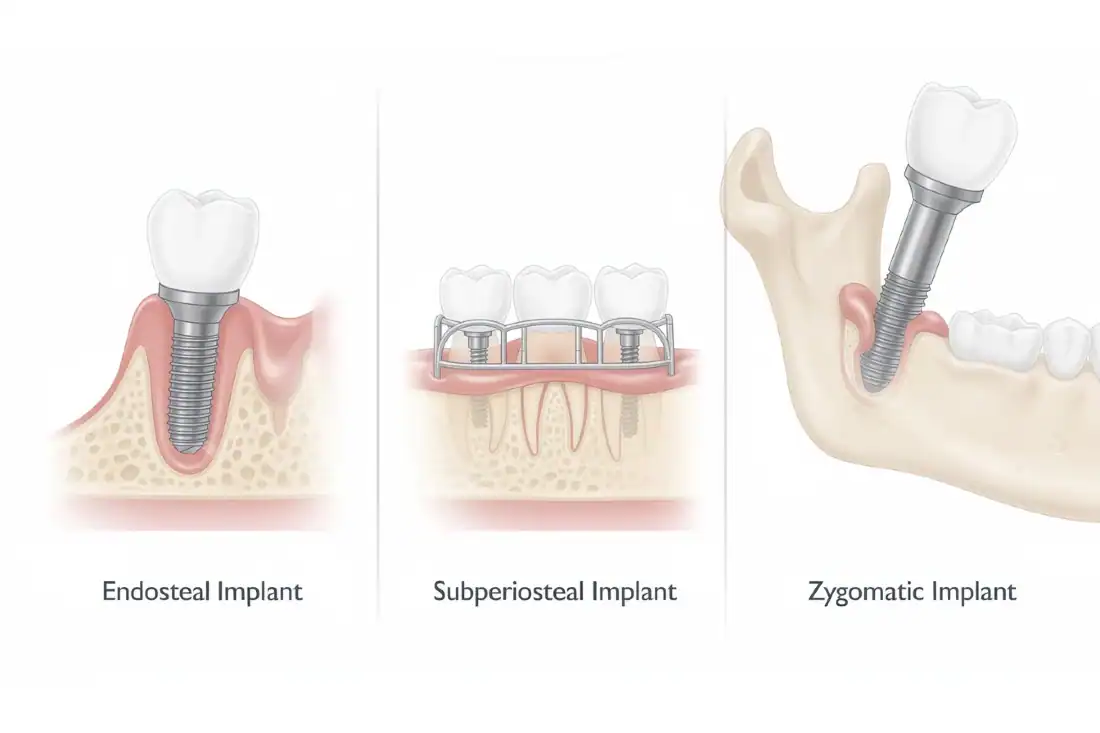
Understanding the differences between these types of dental helps you appreciate which option best suits your situation. Endosteal implants offer the most natural integration with your bone structure and work best when you have healthy jawbone tissue. Most dental implants placed today are endosteal, with success rates exceeding 95%.
Subperiosteal implants shine when bone density is insufficient but the patient wants to avoid bone grafting. They’re less invasive than zygomatic implants and can support an implant bridge or help stabilize dentures effectively.
Zygomatic implants are reserved for complex cases involving severe bone loss in the upper jaw. While they require specialized training to place, they often eliminate months of preparatory procedures, getting patients to their new teeth faster.
Specialized Implant Options Worth Knowing
Beyond the three main types, several specialized variations deserve mention. Mini dental implants, or mini implants, feature smaller diameters and are sometimes used for patients with narrow jawbones or to stabilize dentures. They involve less invasive implant surgery and can sometimes support a temporary tooth while traditional implants heal.
Immediate load implants, sometimes called same-day implants, allow for a temporary tooth to be placed during the same appointment as your implant surgery. While not suitable for every case, they can be life-changing for patients who want to avoid going without teeth during the healing period.
All-on-4 or all-on-6 systems use four dental implants or six dental implants to support an entire arch of teeth. This approach for full mouth dental implants provides a permanent solution for patients missing multiple teeth or all their teeth in one jaw.
How To Choose The Right Dental Implant For You
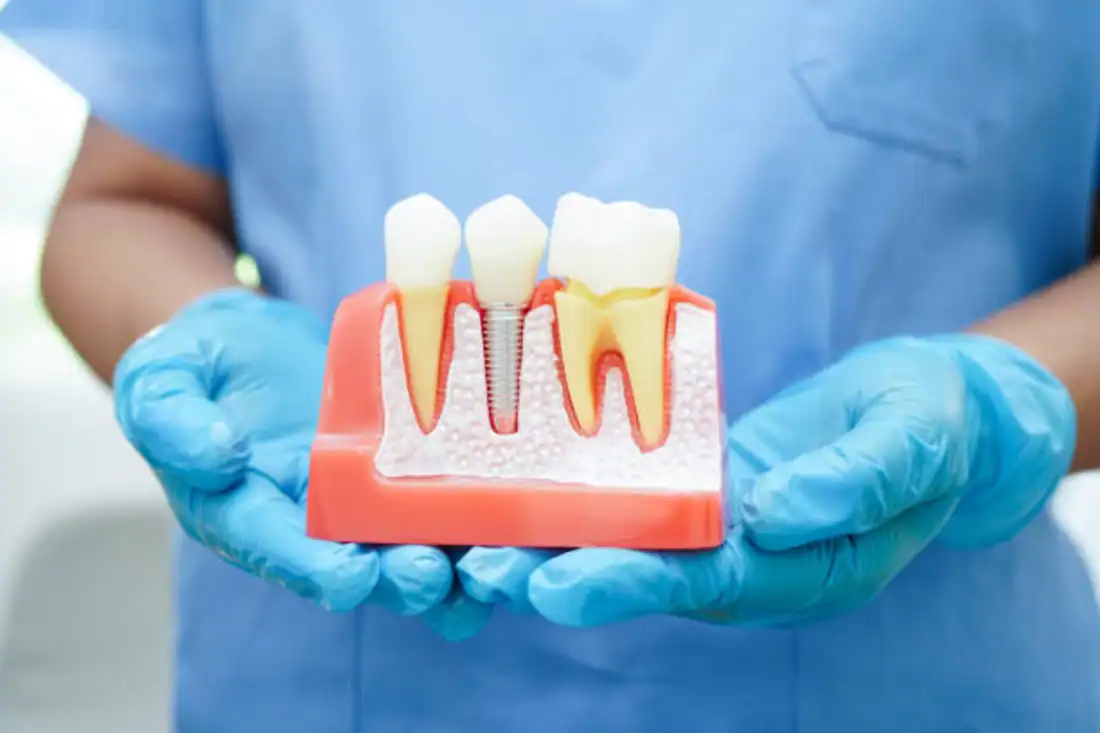
Selecting the appropriate type of dental implant starts with a comprehensive dental exam. Your dental professional will evaluate several critical factors including your bone density, overall oral health, the condition of your remaining teeth, and whether you’re replacing a single tooth or multiple missing teeth.
During your evaluation, advanced imaging will assess your jawbone health and help determine if you have enough healthy jawbone for traditional implants or whether bone grafting procedures might be beneficial. Your dentist will also consider your gum tissue health, as healthy gums are essential for successful implant dentistry.
Financial considerations matter too. While dental implants represent a significant investment, they’re often more cost-effective long-term than repeatedly replacing traditional dentures. The exact cost varies depending on how many teeth need replacement and which types of dental implants your treatment plan requires.
The Dental Implant Procedure Overview
Understanding what to expect during dental implant procedures helps ease anxiety. For endosteal implants, the process typically unfolds in stages. First comes the surgical placement of the metal implant post into your jawbone. This initial implant surgery is performed under local anesthesia, and many patients report less discomfort than expected.
Following placement, the implant heals over three to six months as osseointegration occurs—your jawbone actually grows around the implant post, creating a stable foundation. Once integration is complete, your dentist attaches an abutment, which connects the implant to your new artificial tooth or implant bridge.
For patients needing bone grafting, this step comes first. Bone grafting procedures add material to areas with insufficient bone, promoting new bone growth. While this extends your overall timeline, it ensures your dental restoration has the best possible foundation.
Living With Dental Implants: The Long-Term Benefits
The investment in dental implant surgery pays dividends for years to come. Unlike traditional dentures that may slip or require messy adhesives, dental implants function exactly like healthy teeth. You can eat your favorite foods without worry, speak clearly, and smile confidently knowing your artificial teeth look and feel completely natural.
Dental implants also protect your remaining natural teeth. When you lose a tooth and don’t replace it, neighboring teeth can shift, creating bite problems and increasing cavity risk. An implant fills the gap, maintaining proper spacing and supporting your overall dental health.
Perhaps most importantly, implants preserve your jawbone. When you lose the entire tooth, including the roots, your jaw begins to deteriorate from lack of stimulation. Dental implants act like natural tooth roots, maintaining bone stimulation and preventing the facial collapse that often occurs with long-term tooth loss.
Finding The Right Implant Dentistry Partner
Choosing an experienced dental professional makes all the difference in your implant journey. Look for a practice offering advanced dental implant solutions with modern technology for precise planning and placement. The right team will take time to explain your options, answer questions about dental implants explained thoroughly, and create a personalized treatment plan.
For residents in the Oklahoma City area searching for “dental implants in OKC,” selecting a practice with comprehensive experience in all types of dental implants ensures you’ll receive the most appropriate treatment for your unique situation. The best providers offer everything from single implant placements to complex full arch restorations under one roof.
Your Path Forward to a Complete Smile
Understanding what are the 3 types of dental implants—endosteal, subperiosteal, and zygomatic—empowers you to make informed decisions about your oral health. Whether you’re facing single tooth loss or need full mouth dental implants, modern implant dentistry offers permanent solutions that restore both function and confidence.
The journey to replacing missing teeth begins with a conversation. Schedule a dental exam with an experienced implant dentistry practice to discover which type of dental implant best suits your needs. Your complete smile awaits, and with today’s advanced techniques, achieving it is more accessible than ever before. Contact us today!